
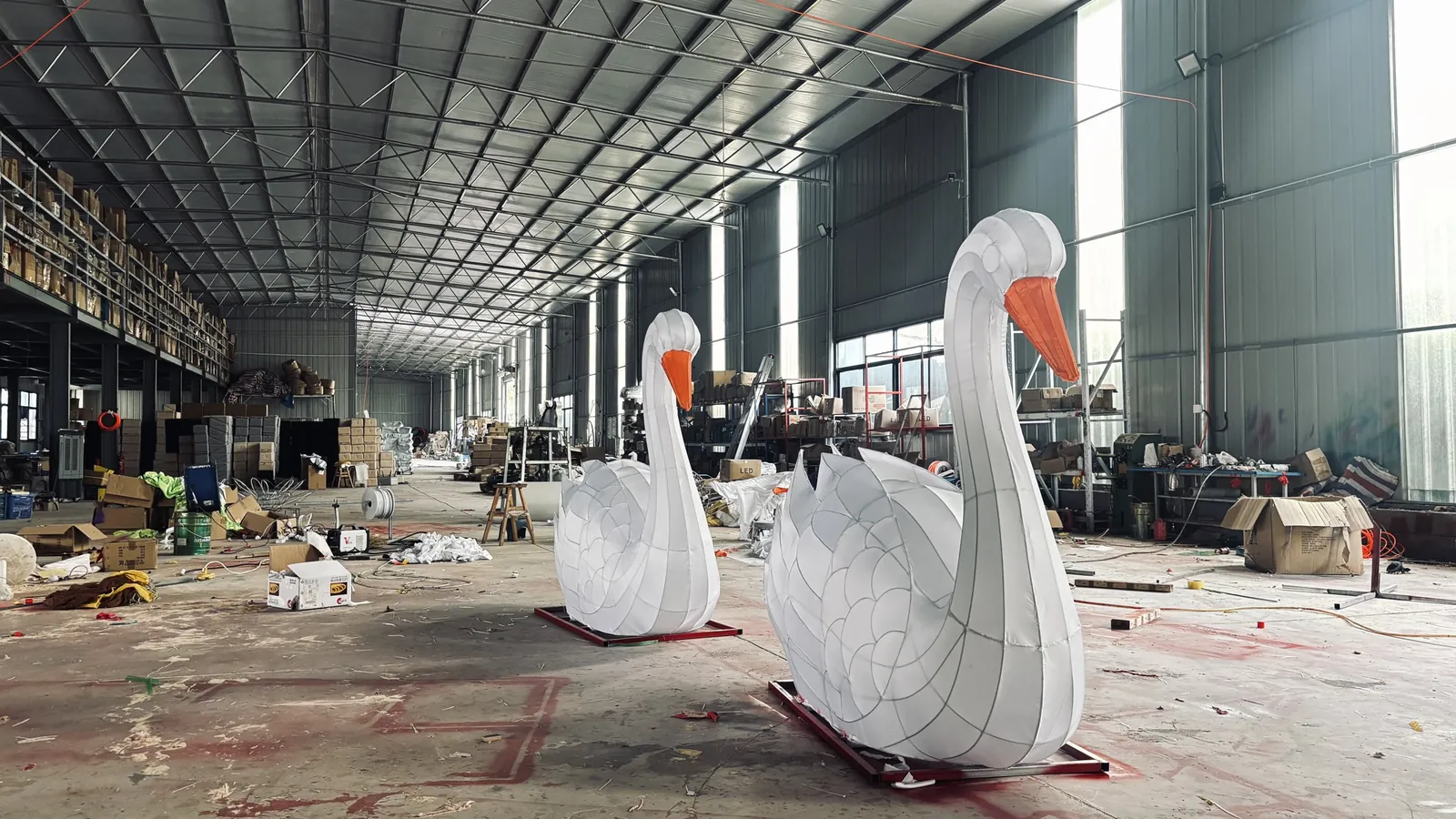
When you order custom animal lanterns for a park, festival or public display, agree on the approval checks before fabrication starts. Ask for daylight photos to confirm the silhouette and finish, lit photos or video to check the appearance after dark, and a packing and handover checklist before dispatch. Decide who approves each stage and what evidence they need.
Agree on the shape before the frame is covered
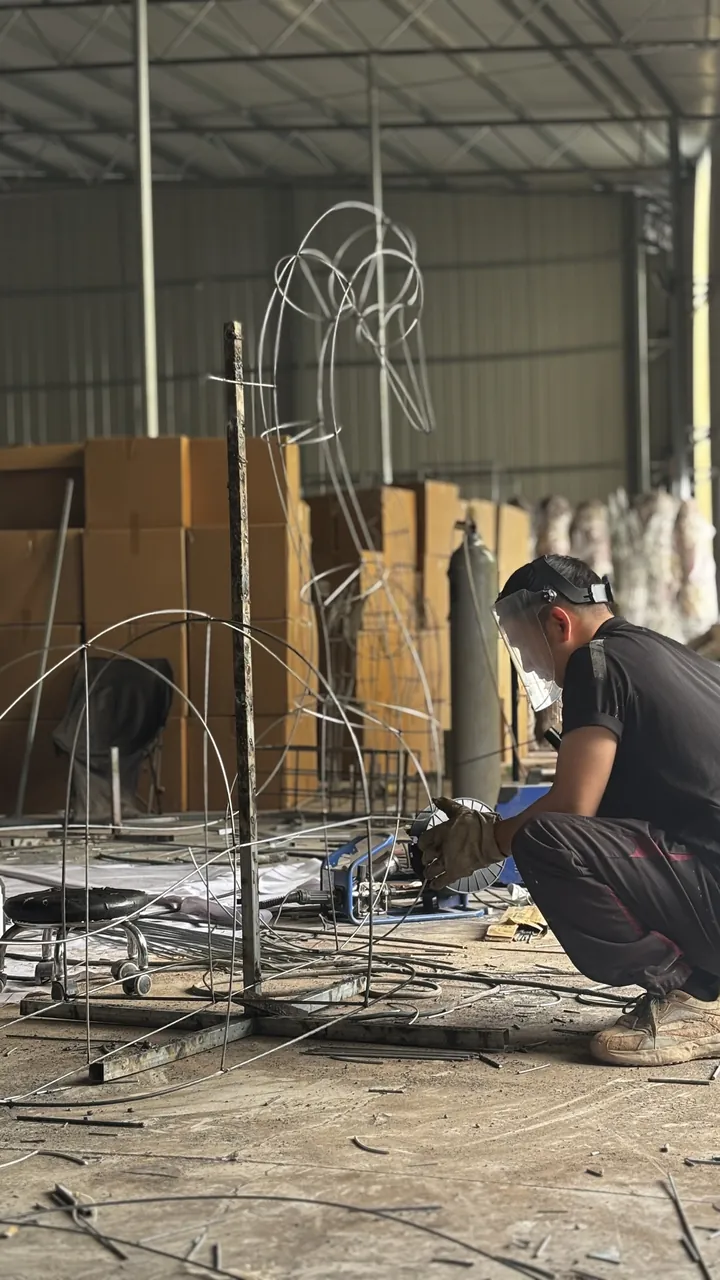
Mark the key viewing angles on the drawings or reference images. A swan intended for a path near water may be seen mainly in profile. One placed at an entrance may also need to read clearly from the front. Note the viewing distances and identify the features that make the animal recognizable, such as the curve of the neck, the shape of the beak and the outline of the wings.
Ask for photos of the uncovered frame from those angles. Where a dimension affects clearance or placement, request a dimensioned drawing or a photo that shows the measurement. This is a good point to flag a shape change while the frame is still visible.
Review the daylight finish and the lit appearance separately
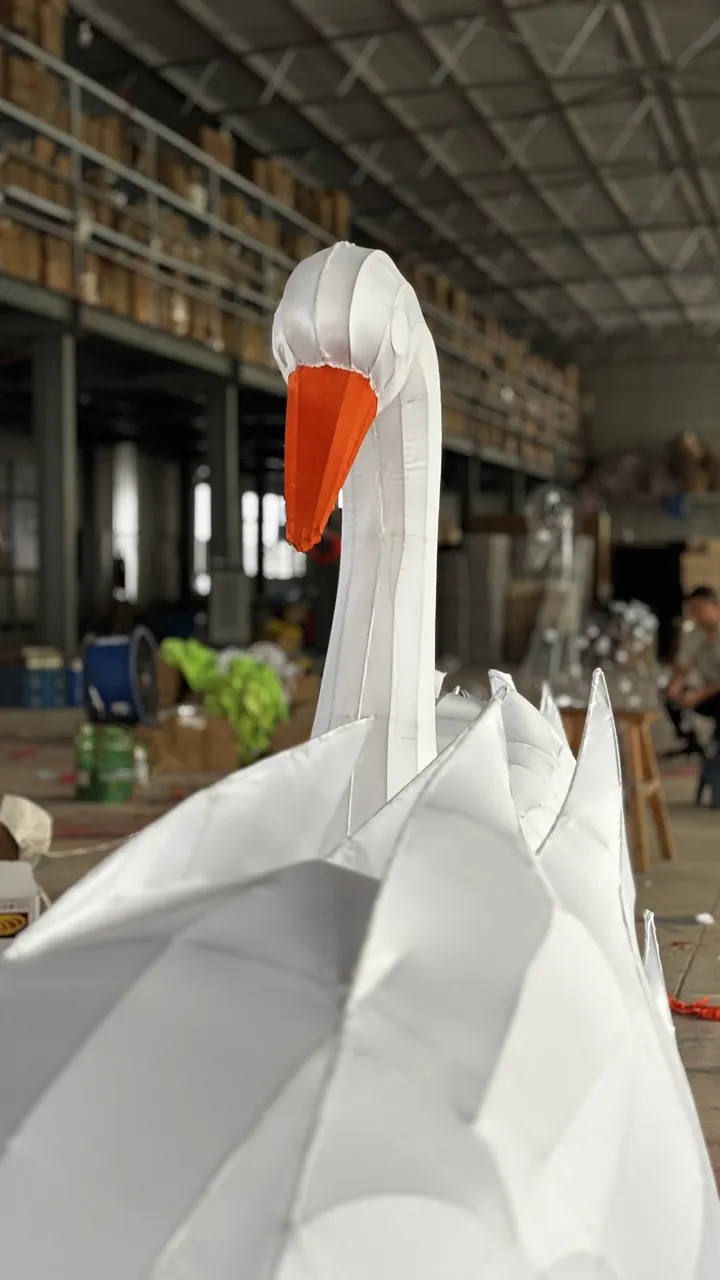
In Jingquanlight’s workshop, photos of a swan lantern show fabric being arranged around the curved head and neck, with a separate close-up showing the layered wings. A wide photo helps you check the overall shape. A close-up lets you review details such as how the fabric follows the curve and how the wing layers meet. Ask for both views if the installation will be seen from nearby paths.
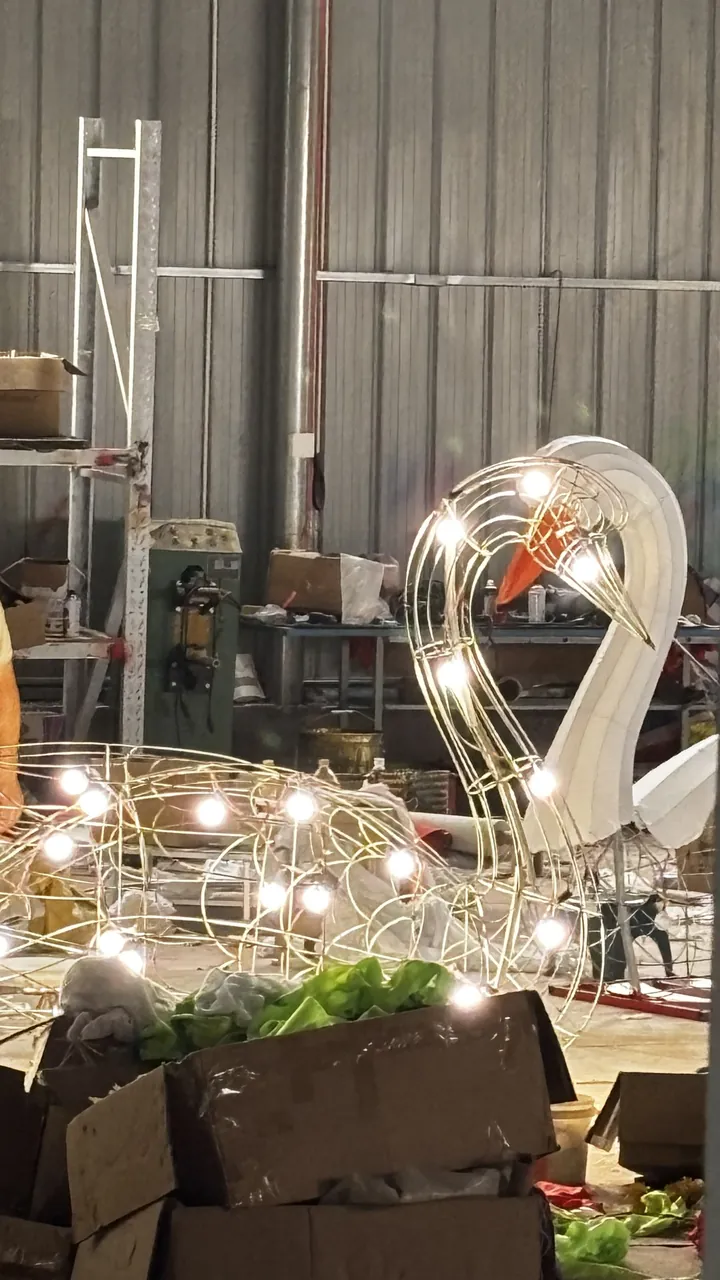
For the lit review, ask for front, side and main approach views under comparable camera settings so you can assess visible bright spots, darker areas and how details read at night. A short video can show how the figure looks as a visitor approaches. Confirm electrical specifications and outdoor suitability from the documentation for the agreed design.
Confirm what will be handed over before dispatch
| Check | What to request |
|---|---|
| Shape and fit | Photos from agreed angles, plus dimensions for the base, overall height and any tight clearance. |
| Finish and appearance | Daylight detail photos and a dark-room or nighttime view, with any agreed corrections recorded. |
| Packing and assembly | A packing list, labels for sections, and assembly guidance if the figure ships in parts. |
| Site responsibilities | Written confirmation of who handles unloading, placement, anchoring, power connections and acceptance at the venue. |
Record approvals and changes against the drawing or photo set you reviewed. If the site has a narrow gate, a fixed opening date or limited access for lifting equipment, flag it before packing is planned. The delivery and site responsibilities guide explains which details to settle with the supplier and venue team.
Prepare your animal lantern brief
Send your animal reference, preferred dimensions, main viewing angles, site photos or a plan, destination and opening date. Include any delivery access limits and the evidence your team needs to approve the design. See the park and zoo display planning page for venue considerations, or send your project brief to Jingquanlight to discuss the design and approval steps.